
CalBar's New AI Proposal Reflects What (Most) Lawyers Already Know
The California Bar’s proposed rule requiring lawyers to verify AI-generated outputs has understandably caught the attention of legal professionals. For many, it raises practical concerns: Will this rule slow me down? Am I adding ethical risks when using AI? Will this proposal make using AI more trouble than it’s worth? Will this slow me down? Add risk? Make using AI more trouble than it’s worth?
And since any new guidance from a regulator (including the Bar), especially around emerging technology, can feel like a moving target, feeling concerned is valid.
But when you look closely, this proposal doesn’t introduce any fundamentally new obligations. Instead, it puts clearer language around something lawyers have always done: take responsibility for the accuracy of their work, no matter where the information comes from.
Every day, lawyers rely on information they sourced from a myriad of locations. And every day, they verify it. A few examples of this:
- When you pull a case from Westlaw or Lexis or a summer associate’s brief, you don’t assume it’s truth—you Shepardize it.
- When you borrow language from a brief, you don’t drop it into a motion untouched—you review the cases it cites.
- When a colleague hands you research, you don’t blindly paste it into your appellate brief—you cite-check the authorities and confirm they support the point being made.
AI fits squarely into that same pattern. This isn’t a new category of work, rather a familiar one applied to a new source. How this looks in practice:
- AI tool produces a case
Verification: Nothing out of your norm; check the citation, read the holding, and confirm it aligns with your argument.
- AI tool summarizes a document
Verification: what you already do when reviewing a junior associate’s summary; spot-check key statements against the source.
- AI extracts facts or flags important passages
Verification: follow the same process as deposition transcripts or exhibits; locate the reference and confirm the context.
And importantly, it’s not as time-consuming as it might sound.
Verification doesn’t mean redoing the work from scratch. It’s simply doing the same thing you’ve always done when drafting any legal document: verifying your sources.
This is also where the right AI tools make a meaningful difference. Working with a legal specific AI tool that doesn’t just generate answers, but links outputs directly back to the underlying source material, builds verification directly into the legal workflow, rather than creating a separate step.
When you Shepardize, you’re not redoing the analysis—you’re checking that the case still stands. The same goes for cite-checking a motion or reviewing a deposition: you’re not reading everything end to end, you’re going straight to the relevant parts and confirming they are correct. Verifying AI works the same way.
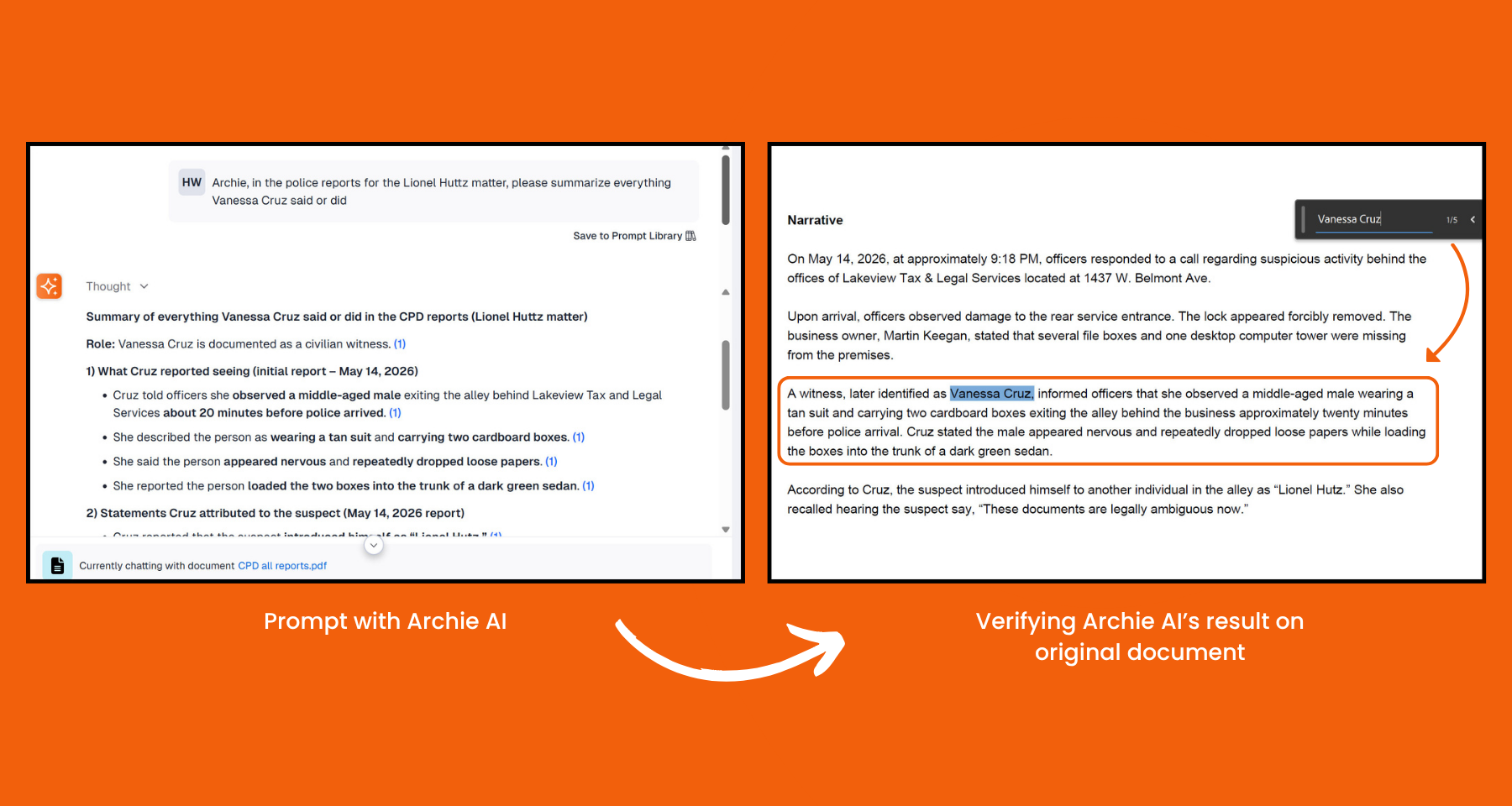
For example, if AI identifies statements made by a particular individual in a witness report, the verification step is simply to locate those mentions in the original document and confirm the surrounding language. It’s no different than using Ctrl+F to find every instance of a name in a document and quickly reviewing the context—something most lawyers do instinctively.
What the California Bar’s proposed amendments ultimately reflect is a broader shift: regulators are beginning to formalize expectations around AI, not discourage its use.
For lawyers who have been hesitant in AI adoption, that clarity can actually be helpful. It reinforces that AI can be used responsibly within the bounds of existing professional standards, and that the Bar recognizes this, too. And for those already using AI tools, it should feel familiar because it mirrors the same review-and-confirm workflows they already trust.
Rather than introducing a new burden, it fits into a framework lawyers already know well. The tools may be evolving, but the way lawyers ensure accuracy hasn’t changed: verify your sources, confirm your citations, and stand behind your work.
And with the right tools, that process can be faster and more focused than ever.