city
👋 Hello! It looks like you're visiting from the US. Do you want to visit our American site?
👋 Hello! It looks like you're visiting from the UK. Do you want to visit our UK site?
👋 Hello! It looks like you're visiting from Australia. Do you want to visit our Australian site?
×

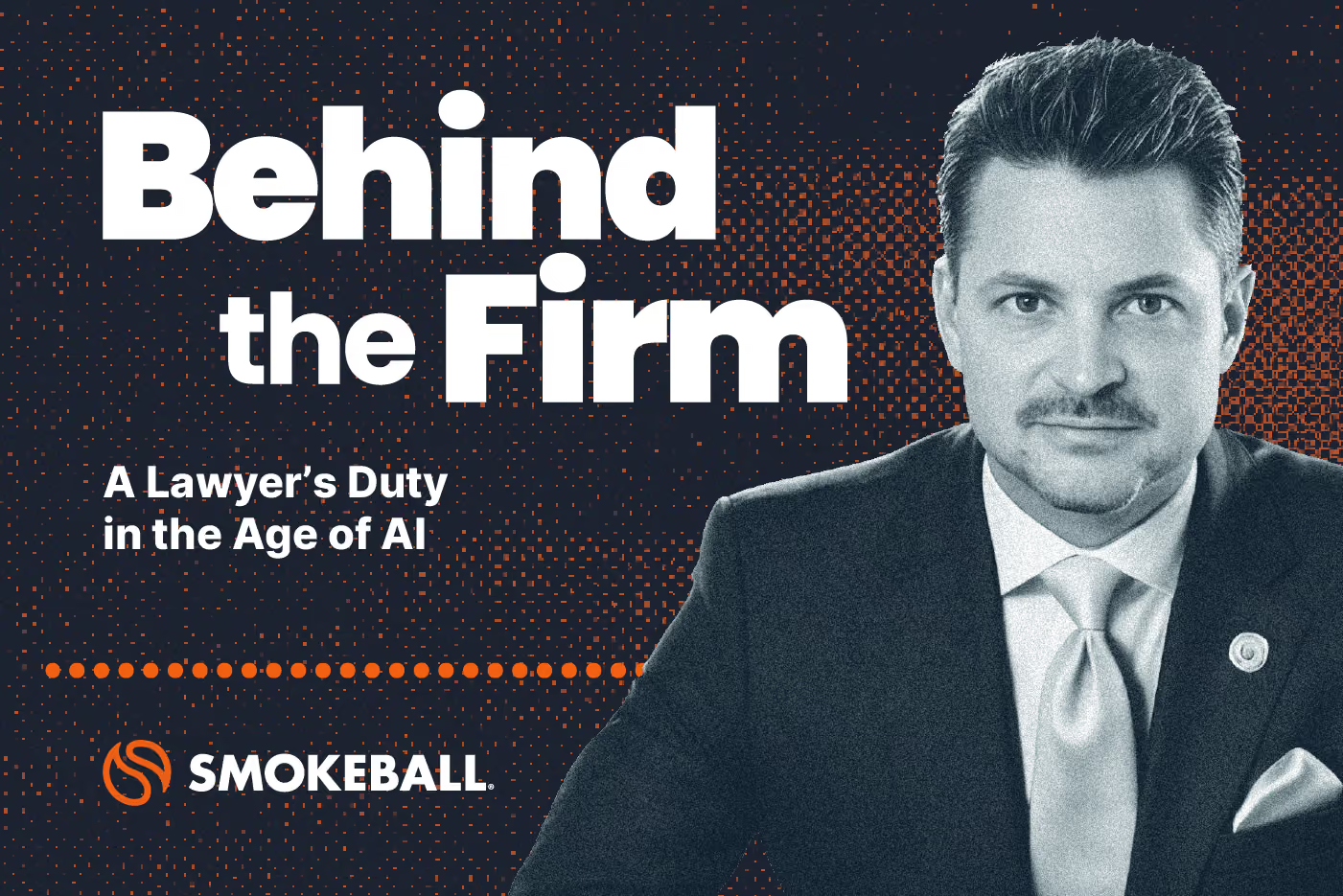
Behind the Firm: A Lawyer’s Duty in the Age of AI

Inside the framework that keeps one law firm ethical, agile, and ahead of the AI curve.

Smokeball Logo
Written by Smokeball
September 17, 2025
3 min read
Smokeball Logo
Written by
September 17, 2025
3 min read
Smokeball Logo
Written by Jordan Turk
September 17, 2025
3 min read
Behind the Firm: A Lawyer’s Duty in the Age of AI
Explore Smokeball
Get Pricing
Explore Smokeball
  • Bill accurately with AutoTime
  • Integrate with Word & Outlook
  • Access 20,000 - prebuilt legal forms
  • Grow with smart reports & insights
Get Pricing

When Matt Mishak, Attorney and Counselor at Law at Mishak Law in Ohio, hopped on our call to chat about artificial intelligence (AI), he wasn’t alone—he was joined by his Firm Integrator, Mischa Muniz Lopez. Right away, it was clear: collaboration and excitement around technology aren’t just buzzwords at this firm, they’re part of the DNA.

Today, more than half of solo and small firm lawyers (53%) are already exploring AI tools, but many remain skeptical—or struggle to bring their teams along. Matt, however, has always had a technology mindset, even jokingly calling himself a “sci-fi nerd” and pointing to a framed photo of the Starship Enterprise on his wall. His curiosity has even previously taken him into practice areas like drone law, and now into the next frontier: artificial intelligence.

In this installment of real stories by real lawyers, we’re exploring AI’s impact in the legal space, how lawyers can not only embrace it, but make it work operationally and culturally for their firm. And how one lawyer has turned AI into a tool his team connects with, proving its impact on efficiency, client trust, and the future of law.  

The Ah-Ha! AI Moment

Like many lawyers, Matt’s first real encounter with AI came in 2023 at Legal Week in New York. Always looking for ways to keep his small firm competitive, he makes it a point to watch what the larger firms are experimenting with. “I’m often thinking, what are the big players doing that I can adapt for a small firm?”  

His takeaway from that year’s conference was on early stages of AI. “They were talking about this new tech called, “ChatGTP,” he reflects on his misnaming with a knowing smirk. Matt remembers the scene vividly: attorneys packed into sessions, jaws literally dropping as speakers described what this technology could do. And then came the quote that stuck with him:

“Those who embrace this technology will be very far ahead very quickly—and very, very hard to catch.”

For Matt, that was the moment AI shifted from a futuristic idea to a priority.

Quick tip for firms:

Attend the conference that feels slightly out of your wheelhouse. Sometimes the most valuable lessons come from conversations just beyond your comfort zone. Even small takeaways from top innovators can translate into major impact for your firm.

AI, the Alien Tech?

Before toying around with ChatGPT prompts, Matt was, like many new to AI, a bit overwhelmed. Conveniently, this was also peak “UFO speculation” season in the news cycle and social media, so when he first started the tool he thought, “this tech feels like it was given to us by aliens, it’s so advanced!”  

Still, curiosity overruled hesitation. He started experimenting, then tinkering, then full-on using it daily. Meanwhile, AI itself wasn’t exactly sitting still. In 2022, ChatGPT-3.5 took the New York State Bar exam and scored in the lower 10th percentile.  Four months later? Its successor, ChatGPT-4 crushed the same exam in the top 10%...and did so in less than six minutes.

Matt knew that he needed to take the advice he learned at Legal Week: those who embrace this tech will be impossible to catch. For him, the path was clear: jump in, play, iterate.  

The AI Manifesto: COUNSEL

For all his love of gadgets and generative tools, Matt isn’t naive to AI’s basic challenges. Getting a multigenerational team on board? Not always smooth. Being transparent with clients? Non-negotiable. And then there are the infamous hallucinations—AI excels at patterns and lacks true consciousness, so it has a habit of predicting the next word, not necessarily the right one.

So when it came time to bring AI into the firm, Matt knew enthusiasm alone wouldn’t cut it. They needed guardrails—something practical, memorable, and lawyer-proof. That’s how Matt came to implement COUNSEL, a framework for his team to follow:


Confidentiality: maintaining sensitive and confidential client information

Oversight: get to know the technology, how it works, what it can do

Understanding: stay in the know on how large language models work and change

Notice: being transparent with clients on how the tool is being used and for what

Scrutiny: scrutinize and confirm the output of any AI response

Equitable fee sharing: charge only for the hours worked  

Lifetime learning: continue to be dynamic and willing to change

The COUNSEL acronym puts continuous checks and balances on Mishak Law in order to utilize AI for all its benefits while remaining ethical, secure, and agile.  

“You can’t bill five hours just because that’s the going rate if AI helps you finish in three. The ROI shows up in many other places like better results, faster turnarounds, and more time for the work that matters.”

With the right process to keep the team grounded, there was still one large piece to confront: getting the team buy-in at all! Matt acknowledged that depending on generational age gaps, there was varying interest in adopting AI. Some people were more resistant to change overall, some where just overwhelmed with the newness.  

“The best way to explain it is this: you already have your process and system in the firm—it hasn’t changed,” Matt said on how he prepped his team. “What’s changed is that now you can plug in tech tools to do the same work faster and with less friction. Your task still exists; it just looks different in an electronic format.”

Matt would show vs. tell his team how the tool worked. For example, he recalls having a brief generated, having it insert the “meat and potatoes” as he called it, including client facts and relevant law.  

“I love to see people’s faces light up once they see what can be accomplished.”

Matt puts it plainly: lawyers are built for this. They’ve been honing the exact skills AI demands all along. Think about it—lawyers spend their careers breaking down dense, unfamiliar concepts for clients in clear, precise language. That’s prompt writing in disguise. Once they realize they can “talk” to GenAI the same way they explain things to a client, the whole technology suddenly feels a lot less foreign.

Quick tip for firms:

Remember that you’ve likely put in more research and time with AI than your team has. Meet them where they are, show them real life examples on how it will improve their specific workflow rather than explain in vague terms and buzzwords.

The Possibilities are Endless

Matt didn’t just stop at experimenting with prompts and templates, he went full-on builder. One of his proudest innovations was a custom GPT designed specifically for expungement and record-sealing cases in Ohio. This wasn’t a generic chatbot; it was trained with the nuances of state law and tailored to handle the tricky details of defendants’ criminal backgrounds. For a client, the burning question is simple: Can I get my record sealed or not? With Matt’s GPT, the hope was to answer faster than ever.  

He put it to the test: Mischa (who joins Matt during our chat) fed in dockets, and within minutes the GPT generated a complete report. It flagged a single case that would block the client’s entire record from being sealed. What used to eat up four to five painstaking hours of manual review was done in just eight minutes.  

“With this, we could tell the client, ‘We’ll look into this and verify,’ but also give them high confidence that if we resolved this one case, we’d likely be able to get all the others sealed,” Matt shared.  

That was also the moment he recalls Mischa’s face lighting up and connecting with the tech. With the right prompts, the right tools, and a human lawyer guiding the process, Matt showed how firms can craft AI systems that feel less like one-size-fits-all tech and more like a bespoke legal assistant.

“Seeing my team realize the huge potential of AI was super exciting and rewarding.

The Lawyer’s Moral Code

Matt’s stance on AI is that it isn’t just about shaving hours off a task or keeping pace with the firm down the street. It’s about responsibility. “Lawyers occupy a role in society where we hold things together, maintain order, and give advice,” he says. If the legal market is being reshaped as quickly as the Industrial Revolution—only faster—then lawyers can’t afford to sit back. Clients aren’t just looking for representation; they’re looking for trusted advisors who can help them navigate the future we’re all walking into.”

That means the duty to adopt AI goes deeper than efficiency. Good lawyers, Matt argues, owe it to their clients to learn generative AI. Not because it’s trendy, but because it’s inevitable and society is going to need trusted advisors to help guide future dynamics. “If you’re sticking to paper and quill pen, you’re going to be in trouble here,” he says with a laugh. But behind the humor is a point of urgency: resisting change has always been baked into the profession, but our tolerance for risk needs to shift.

The payoff isn’t just internal. One study estimates that over 85% of identified legal needs go unmet, often because people can’t afford representation and instead turn to “cousin Bill,” Google, or no one at all. AI changes that equation. By making legal work more affordable, firms can serve clients who would otherwise be left out. That means more access to justice, more clients served, and more business opportunities for firms willing to embrace it.

It's about impact. “You put a lot of positive vibes into the world,” Matt says, describing the relief on clients’ faces when they realize their case is manageable. AI, in his eyes, isn’t just a tool; it’s a way to provide better care, meet clients where they are, and help them navigate the world they’re actually living in.  

Law in the Age of AI

Mishak Law has proven that when lawyers embrace technology with curiosity and guardrails, they can work smarter, serve more clients, and create real human impact. That’s not science fiction; that’s law practice in 2025 and beyond.  

For Matt, AI isn’t just a competitive edge or a time-saver, but a professional duty. Lawyers who lean into the tool represent what it means to be a trusted advisor in a world that’s changing faster than anyone expected. And while the AI might seems futuristic, the mission hasn’t changed: guide clients with confidence and deliver a little peace of mind.

Or, as Matt might put it: the task still exists—it just looks different. And if you’re bold enough to embrace it, the possibilities for your firm (and your clients) are endless.


👋 Hello! It looks like you're visiting from the US. Do you want to visit our American site?
👋 Hello! It looks like you're visiting from the UK. Do you want to visit our UK site?
👋 Hello! It looks like you're visiting from Australia. Do you want to visit our Australian site?
×

Behind the Firm: A Lawyer’s Duty in the Age of AI

Written by

|

September 16, 2025

Smokeball Logo

Written by Smokeball

|

September 16, 2025

Jordan Turk

Written by Jordan Turk

|

September 16, 2025

Behind the Firm: A Lawyer’s Duty in the Age of AI

When Matt Mishak, Attorney and Counselor at Law at Mishak Law in Ohio, hopped on our call to chat about artificial intelligence (AI), he wasn’t alone—he was joined by his Firm Integrator, Mischa Muniz Lopez. Right away, it was clear: collaboration and excitement around technology aren’t just buzzwords at this firm, they’re part of the DNA.

Today, more than half of solo and small firm lawyers (53%) are already exploring AI tools, but many remain skeptical—or struggle to bring their teams along. Matt, however, has always had a technology mindset, even jokingly calling himself a “sci-fi nerd” and pointing to a framed photo of the Starship Enterprise on his wall. His curiosity has even previously taken him into practice areas like drone law, and now into the next frontier: artificial intelligence.

In this installment of real stories by real lawyers, we’re exploring AI’s impact in the legal space, how lawyers can not only embrace it, but make it work operationally and culturally for their firm. And how one lawyer has turned AI into a tool his team connects with, proving its impact on efficiency, client trust, and the future of law.  

The Ah-Ha! AI Moment

Like many lawyers, Matt’s first real encounter with AI came in 2023 at Legal Week in New York. Always looking for ways to keep his small firm competitive, he makes it a point to watch what the larger firms are experimenting with. “I’m often thinking, what are the big players doing that I can adapt for a small firm?”  

His takeaway from that year’s conference was on early stages of AI. “They were talking about this new tech called, “ChatGTP,” he reflects on his misnaming with a knowing smirk. Matt remembers the scene vividly: attorneys packed into sessions, jaws literally dropping as speakers described what this technology could do. And then came the quote that stuck with him:

“Those who embrace this technology will be very far ahead very quickly—and very, very hard to catch.”

For Matt, that was the moment AI shifted from a futuristic idea to a priority.

Quick tip for firms:

Attend the conference that feels slightly out of your wheelhouse. Sometimes the most valuable lessons come from conversations just beyond your comfort zone. Even small takeaways from top innovators can translate into major impact for your firm.

AI, the Alien Tech?

Before toying around with ChatGPT prompts, Matt was, like many new to AI, a bit overwhelmed. Conveniently, this was also peak “UFO speculation” season in the news cycle and social media, so when he first started the tool he thought, “this tech feels like it was given to us by aliens, it’s so advanced!”  

Still, curiosity overruled hesitation. He started experimenting, then tinkering, then full-on using it daily. Meanwhile, AI itself wasn’t exactly sitting still. In 2022, ChatGPT-3.5 took the New York State Bar exam and scored in the lower 10th percentile.  Four months later? Its successor, ChatGPT-4 crushed the same exam in the top 10%...and did so in less than six minutes.

Matt knew that he needed to take the advice he learned at Legal Week: those who embrace this tech will be impossible to catch. For him, the path was clear: jump in, play, iterate.  

The AI Manifesto: COUNSEL

For all his love of gadgets and generative tools, Matt isn’t naive to AI’s basic challenges. Getting a multigenerational team on board? Not always smooth. Being transparent with clients? Non-negotiable. And then there are the infamous hallucinations—AI excels at patterns and lacks true consciousness, so it has a habit of predicting the next word, not necessarily the right one.

So when it came time to bring AI into the firm, Matt knew enthusiasm alone wouldn’t cut it. They needed guardrails—something practical, memorable, and lawyer-proof. That’s how Matt came to implement COUNSEL, a framework for his team to follow:


Confidentiality: maintaining sensitive and confidential client information

Oversight: get to know the technology, how it works, what it can do

Understanding: stay in the know on how large language models work and change

Notice: being transparent with clients on how the tool is being used and for what

Scrutiny: scrutinize and confirm the output of any AI response

Equitable fee sharing: charge only for the hours worked  

Lifetime learning: continue to be dynamic and willing to change

The COUNSEL acronym puts continuous checks and balances on Mishak Law in order to utilize AI for all its benefits while remaining ethical, secure, and agile.  

“You can’t bill five hours just because that’s the going rate if AI helps you finish in three. The ROI shows up in many other places like better results, faster turnarounds, and more time for the work that matters.”

With the right process to keep the team grounded, there was still one large piece to confront: getting the team buy-in at all! Matt acknowledged that depending on generational age gaps, there was varying interest in adopting AI. Some people were more resistant to change overall, some where just overwhelmed with the newness.  

“The best way to explain it is this: you already have your process and system in the firm—it hasn’t changed,” Matt said on how he prepped his team. “What’s changed is that now you can plug in tech tools to do the same work faster and with less friction. Your task still exists; it just looks different in an electronic format.”

Matt would show vs. tell his team how the tool worked. For example, he recalls having a brief generated, having it insert the “meat and potatoes” as he called it, including client facts and relevant law.  

“I love to see people’s faces light up once they see what can be accomplished.”

Matt puts it plainly: lawyers are built for this. They’ve been honing the exact skills AI demands all along. Think about it—lawyers spend their careers breaking down dense, unfamiliar concepts for clients in clear, precise language. That’s prompt writing in disguise. Once they realize they can “talk” to GenAI the same way they explain things to a client, the whole technology suddenly feels a lot less foreign.

Quick tip for firms:

Remember that you’ve likely put in more research and time with AI than your team has. Meet them where they are, show them real life examples on how it will improve their specific workflow rather than explain in vague terms and buzzwords.

The Possibilities are Endless

Matt didn’t just stop at experimenting with prompts and templates, he went full-on builder. One of his proudest innovations was a custom GPT designed specifically for expungement and record-sealing cases in Ohio. This wasn’t a generic chatbot; it was trained with the nuances of state law and tailored to handle the tricky details of defendants’ criminal backgrounds. For a client, the burning question is simple: Can I get my record sealed or not? With Matt’s GPT, the hope was to answer faster than ever.  

He put it to the test: Mischa (who joins Matt during our chat) fed in dockets, and within minutes the GPT generated a complete report. It flagged a single case that would block the client’s entire record from being sealed. What used to eat up four to five painstaking hours of manual review was done in just eight minutes.  

“With this, we could tell the client, ‘We’ll look into this and verify,’ but also give them high confidence that if we resolved this one case, we’d likely be able to get all the others sealed,” Matt shared.  

That was also the moment he recalls Mischa’s face lighting up and connecting with the tech. With the right prompts, the right tools, and a human lawyer guiding the process, Matt showed how firms can craft AI systems that feel less like one-size-fits-all tech and more like a bespoke legal assistant.

“Seeing my team realize the huge potential of AI was super exciting and rewarding.

The Lawyer’s Moral Code

Matt’s stance on AI is that it isn’t just about shaving hours off a task or keeping pace with the firm down the street. It’s about responsibility. “Lawyers occupy a role in society where we hold things together, maintain order, and give advice,” he says. If the legal market is being reshaped as quickly as the Industrial Revolution—only faster—then lawyers can’t afford to sit back. Clients aren’t just looking for representation; they’re looking for trusted advisors who can help them navigate the future we’re all walking into.”

That means the duty to adopt AI goes deeper than efficiency. Good lawyers, Matt argues, owe it to their clients to learn generative AI. Not because it’s trendy, but because it’s inevitable and society is going to need trusted advisors to help guide future dynamics. “If you’re sticking to paper and quill pen, you’re going to be in trouble here,” he says with a laugh. But behind the humor is a point of urgency: resisting change has always been baked into the profession, but our tolerance for risk needs to shift.

The payoff isn’t just internal. One study estimates that over 85% of identified legal needs go unmet, often because people can’t afford representation and instead turn to “cousin Bill,” Google, or no one at all. AI changes that equation. By making legal work more affordable, firms can serve clients who would otherwise be left out. That means more access to justice, more clients served, and more business opportunities for firms willing to embrace it.

It's about impact. “You put a lot of positive vibes into the world,” Matt says, describing the relief on clients’ faces when they realize their case is manageable. AI, in his eyes, isn’t just a tool; it’s a way to provide better care, meet clients where they are, and help them navigate the world they’re actually living in.  

Law in the Age of AI

Mishak Law has proven that when lawyers embrace technology with curiosity and guardrails, they can work smarter, serve more clients, and create real human impact. That’s not science fiction; that’s law practice in 2025 and beyond.  

For Matt, AI isn’t just a competitive edge or a time-saver, but a professional duty. Lawyers who lean into the tool represent what it means to be a trusted advisor in a world that’s changing faster than anyone expected. And while the AI might seems futuristic, the mission hasn’t changed: guide clients with confidence and deliver a little peace of mind.

Or, as Matt might put it: the task still exists—it just looks different. And if you’re bold enough to embrace it, the possibilities for your firm (and your clients) are endless.

Related Product Content

A smiling person wearing a collared shirt, tie, and glasses, works on a laptop at a coffee shop.

10 AI Apps for Your Legal Toolbox

No items found.
Smokeball's 2025 State of Law Report

2025 State of Law: Adapting for Resilience and Growth in a Tech-Driven Age

Book Your Free Demo

Ready to see how Smokeball client intake software helps you Run Your Best Firm? Schedule your free demo!

This field is required.

This field is required.

This field is required.

This field is required.

This field is required.

Your personal data will be kept confidential. By sharing your phone number, you agree to receive promotional messages and/or phone calls from Smokeball. Consent is not a condition of purchase. View our Privacy Policy and Terms of Service for more information.

Thank you! Your submission has been received!
Oops! Something went wrong while submitting the form.

More from the Smokeball blog